Introduction
As electric vehicles (EVs) become increasingly popular worldwide, charging technology has become a key factor affecting the user experience. An EV charging cable is not simply a power connection device; it is an essential component that determines charging speed, safety, compatibility, and overall charging efficiency.
Different countries, vehicle manufacturers, and charging networks use different charging standards and connector types. Understanding the differences between AC and DC charging cables, connector standards, charging modes, and cable specifications can help EV owners and businesses choose the right charging solution.
What Is an EV Charging Cable?
An EV charging cable is a specialized electrical cable that transfers power between a charging station and an electric vehicle battery system. Unlike conventional electrical cables, EV charging cables are designed with communication functions that allow the vehicle and charger to exchange information during charging.
A complete EV charging cable typically includes:
-
Charging connectors
-
Copper conductors
-
Insulation layers
-
Protective outer jacket
-
Communication wires
-
Safety components
High-quality EV cables are designed to withstand repeated bending, outdoor environments, temperature changes, and long-term charging cycles. Materials such as TPE, TPU, PVC, and rubber compounds are commonly used for insulation and protective jackets.
Main Types of EV Charging Cables
EV charging cables are mainly divided into AC charging cables and DC charging cables based on the charging method.
1. AC Charging Cable
AC charging cables are the most common type for home charging and public charging stations.
During AC charging, electricity from the grid is converted into DC power by the vehicle’s onboard charger before entering the battery.
Common applications include:
-
Home wall chargers
-
Workplace charging stations
-
Public AC charging points
Advantages of AC charging cables:
-
Lower installation cost
-
Suitable for daily charging
-
Wide compatibility
-
Reliable and convenient
Most residential EV charging uses AC charging because vehicles can remain connected for several hours overnight.
2. DC Fast Charging Cable
DC charging cables are designed for high-speed charging applications. Unlike AC charging, DC charging delivers electricity directly to the vehicle battery without relying on the onboard charger.
They are mainly used in:
-
Highway charging stations
-
Commercial charging networks
-
Fleet charging facilities
Advantages include:
-
Much faster charging speed
-
Higher power output
-
Suitable for long-distance travel
Some DC fast-charging systems can provide hundreds of kilowatts of charging power and significantly reduce charging time
EV Charging Connector Types
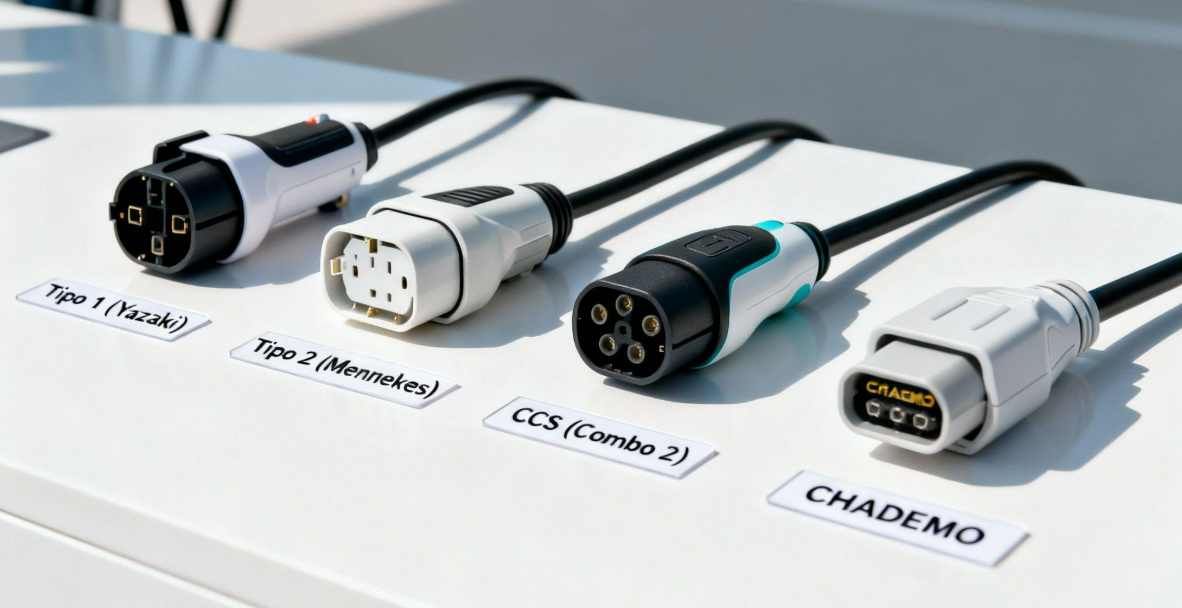
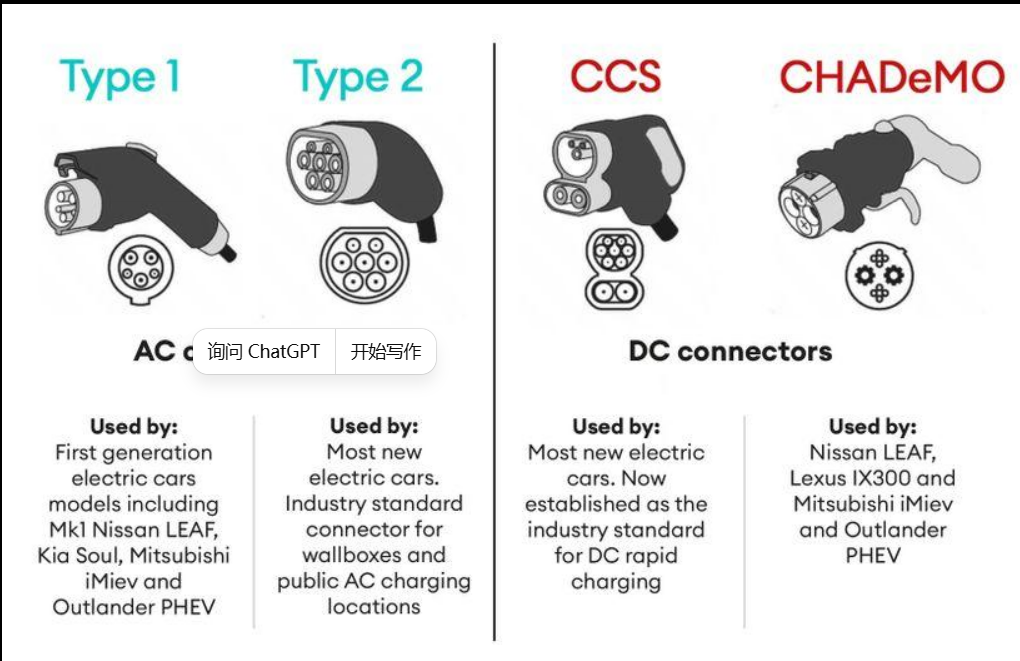
Different regions use different EV connector standards. The most common connectors include Type 1, Type 2, CCS, CHAdeMO, Tesla connectors, and GB/T.
Type 1 Connector (SAE J1772)
Type 1 connectors are mainly used in North America and some Asian markets.
Features:
-
Single-phase AC charging
-
Five-pin design
-
Common for residential charging
Type 1 is widely used for passenger EVs that support AC charging systems based on the SAE J1772 standard.
Type 2 Connector (Mennekes)
Type 2 is the dominant AC charging connector in Europe and many international markets.
Features:
-
Seven-pin design
-
Supports single-phase and three-phase charging
-
Suitable for home and public charging
Type 2 cables can support higher charging power compared with Type 1 and are widely adopted in European charging infrastructure.
Common applications:
-
Residential wall boxes
-
Commercial charging stations
-
Workplace charging
CCS Connector (Combined Charging System)
CCS combines AC charging and DC fast charging into one connector system.
There are two main versions:
CCS1
Used mainly in:
-
North America
-
Some Asian markets
CCS2
Used mainly in:
-
Europe
-
Australia
-
Other international markets
CCS allows vehicles to use both normal AC charging and high-speed DC charging through a single charging port. (凯迈电缆)
CHAdeMO Connector
CHAdeMO is a DC fast-charging standard originally developed in Japan.
Features:
-
Dedicated DC fast charging
-
Reliable communication system
-
Used by some Japanese EV models
Although CCS has become more common globally, CHAdeMO remains available in some markets, especially for specific vehicle models. (凯迈电缆)
GB/T Connector
GB/T is the EV charging standard mainly used in China.
It includes separate standards for:
-
AC charging
-
DC fast charging
China has developed a large charging network based on GB/T connectors, supporting domestic EV manufacturers and charging infrastructure.
EV Charging Modes Explained
EV charging cables are also classified by charging modes according to communication and safety functions.
Mode 1
Mode 1 uses a standard electrical outlet without advanced communication protection.
Applications:
-
Basic charging
-
Low-power applications
Due to limited safety features, it is less common for modern EV charging.
Mode 2
Mode 2 charging cables include an in-cable control box that provides additional protection.
Features:
-
Portable charging solution
-
Safety monitoring
-
Suitable for household charging
Mode 3
Mode 3 is the most common charging method for home wall boxes and public AC charging stations.
Advantages:
-
Better safety control
-
Communication between vehicle and charger
-
Higher charging capacity
Mode 4
Mode 4 refers to DC fast charging.
Features:
-
High-power charging
-
Direct battery charging
-
Used mainly in commercial charging stations
How to Choose the Right EV Charging Cable?
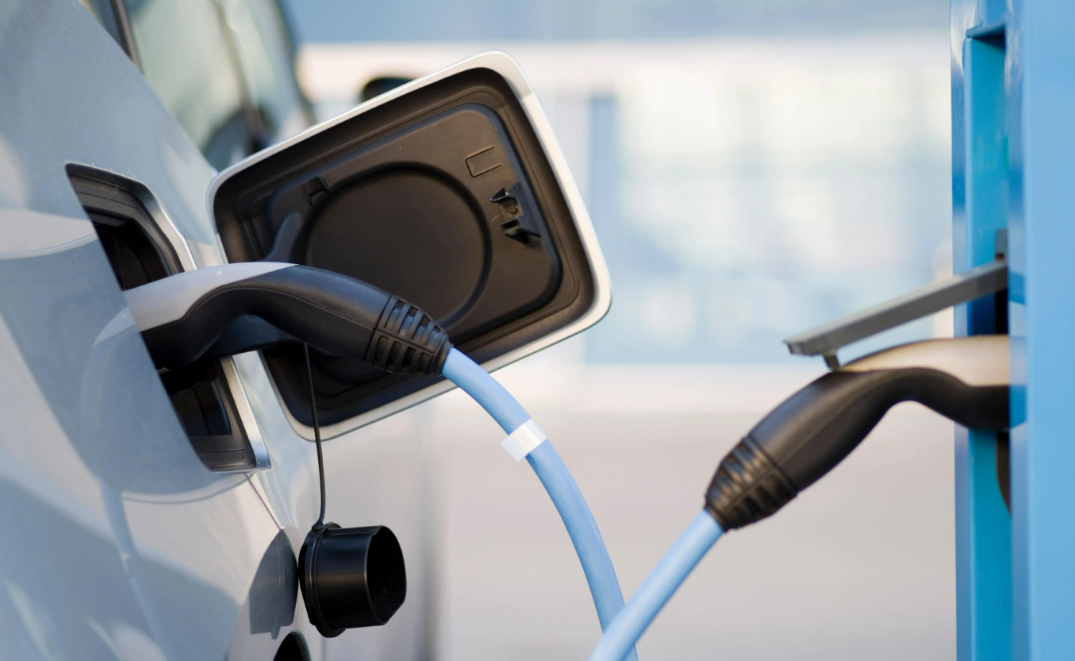
When selecting an EV charging cable, consider the following factors:
1. Vehicle Compatibility
Always confirm:
-
Connector type
-
Charging standard
-
Maximum charging capacity
A cable must match both the vehicle and charging station.
2. Charging Power
Choose the cable according to your charging requirements.
Common power ratings include:
-
3.7 kW
-
7.4 kW
-
11 kW
-
22 kW
A higher-rated cable does not automatically increase charging speed if the vehicle cannot accept higher power.
3. Cable Length
Common lengths include:
-
3 meters
-
5 meters
-
7 meters
-
10 meters
Short cables are easier to store, while longer cables provide more flexibility in parking situations.
4. Cable Quality and Safety
A reliable EV cable should provide:
-
High insulation performance
-
Weather resistance
-
Heat resistance
-
Mechanical durability
-
Stable connector performance
For outdoor charging, choosing cables with strong protection against UV exposure, moisture, and temperature changes is important. (KMCABLE)
Future Trends in EV Charging Cables
With the growth of electric mobility, EV charging cables are developing toward:
Higher Charging Power
Future charging systems will require cables capable of handling higher current and voltage levels.
Smarter Charging
New charging technologies are integrating:
-
Intelligent communication
-
Energy management
-
Vehicle-to-grid (V2G) functions
Better Materials
Manufacturers are developing lighter, more flexible, and more durable cable materials for improved user experience.
Conclusion
EV charging cables are a critical part of electric vehicle infrastructure. Understanding different cable types, connector standards, and charging modes helps users select the most suitable solution for their vehicles and charging environments.
From Type 1 and Type 2 AC cables to CCS and CHAdeMO fast-charging solutions, each standard serves different markets and applications. Choosing a reliable EV charging cable with the correct power rating, connector type, and safety features ensures efficient, safe, and convenient EV charging.
As electric vehicles continue to expand globally, advanced charging cable technology will play an increasingly important role in building a cleaner and smarter transportation system.